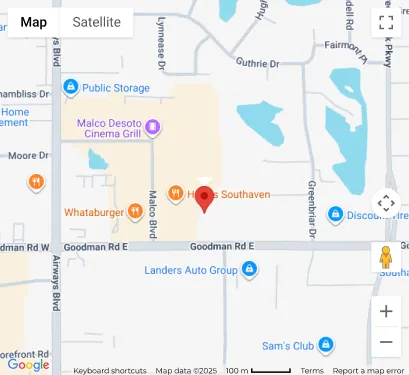
Patients in Southaven, Mississippi turn to Desoto Dentures and Implants for clear guidance on tooth extractions in Southaven, MS. This page explains when removal is recommended, how the procedure works, and what to expect during recovery so you can make informed decisions about your oral health.
About Tooth Extraction Treatment
A tooth extraction is the removal of a tooth from its socket in the jawbone. Common reasons include deep decay, severe fracture, advanced gum disease, dental crowding, or impacted wisdom teeth. Extractions are categorized as simple or surgical. A simple extraction removes a tooth that is visible above the gum line. A surgical extraction is used for teeth that are broken at the gum line, have curved roots, or are impacted under the gums and bone.
How Tooth Removal Can Help
- It Relieves Pain From Severe Infection Or Irreparable Decay.
- It Prevents The Spread Of Infection To Nearby Teeth And Tissues.
- It Creates Space For Orthodontic Treatment When Crowding Is Present.
- It Reduces Risks Linked To Impacted Wisdom Teeth, Such As Cysts Or Damage To Adjacent Teeth.
- It Helps Protect Overall Health When A Tooth Cannot Be Restored Predictably.

The Tooth Extraction Process
- Examination And Imaging: dentist reviews your medical history and takes digital X-rays to evaluate root shape, bone levels, and nearby structures.
- Anesthesia And Comfort: The area is numbed with local anesthesia so you remain comfortable.
- Tooth Removal: For a simple extraction, the tooth is gently loosened and lifted out. For a surgical extraction, a small incision and sectioning of the tooth help with safe removal.
- Site Care: The socket is cleaned, and stitches may be placed. Gauze helps control initial bleeding.
- Post-Op Instructions: You receive written aftercare guidance for pain control, swelling, diet, and activity.
What To Expect Before And After Extraction
Before your visit, share your medications and medical conditions so your care plan is safe. Most patients feel pressure but not sharp pain during the procedure due to effective local anesthesia.
After the appointment, mild bleeding and swelling are normal for the first 24 to 48 hours. Most people resume normal routines within a day or two after a simple extraction.
Recovery And Aftercare Tips
- Bite Gently On Gauze For The Time Recommended To Help A Blood Clot Form.
- Avoid Straws, Smoking, And Vigorous Rinsing For At Least 24 Hours To Reduce Dry Socket Risk.
- Use A Cold Compress In 10 To 20 Minute Intervals For The First Day To Limit Swelling.
- Choose Soft Foods Like Yogurt, Eggs, And Mashed Potatoes, Then Advance As Comfortable.
- Brush Gently, Avoid The Socket, And Start Warm Saltwater Rinses After 24 Hours As Directed.
Extraction Pricing
$99 (Starting Price with Dentures)
Frequently Asked Questions
Hours