
Dental crowns and bridges in Southaven, MS are custom-made restorations that restore the strength, shape, and appearance of damaged or missing teeth. At Desoto Dentures and Implants in Southaven, patients can expect clear guidance on when a crown or bridge makes sense, how the process works, and how to care for the restored teeth.
Dental Crowns Explained
A dental crown, sometimes called a “tooth cap,” fits over a prepared tooth to rebuild its form and function. Crowns are used when a filling would not be strong enough, such as after a root canal, for a cracked or severely worn tooth, or to protect a tooth with a large cavity.
Common materials include porcelain, zirconia, porcelain-fused-to-metal, and gold alloys. Porcelain and zirconia offer lifelike color and are popular for front and back teeth.
How Dental Crowns Can Help You
- Restore Chewing Comfort And Function So You Can Eat With Confidence.
- Protect Weakened Teeth From Fracture Or Further Wear.
- Improve Tooth Shape, Alignment Appearance, And Color For A Seamless Smile.
- Stabilize Teeth After Root Canal Treatment.
- Cover Dental Implants To Replace Missing Teeth.
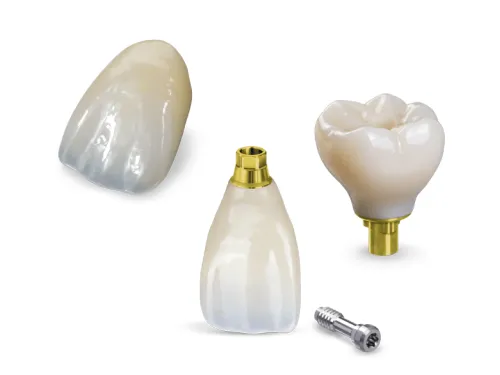
Dental Crowns Vs. Dental Bridges
A dental crown covers a single damaged tooth to restore its shape and strength, while a dental bridge replaces one or more missing teeth by anchoring to the healthy teeth on either side of the gap. Crowns are ideal when a tooth is cracked, weakened, or has undergone root canal therapy. Bridges are recommended when a tooth has been lost and the neighboring teeth can support a connected restoration.
Both options use custom-crafted porcelain or zirconia for a natural appearance. During your consultation at Desoto Dentures and Implants, dentist will evaluate your situation and recommend the approach that best fits your needs, whether that is restoring a single tooth with a crown or closing a gap with a bridge.
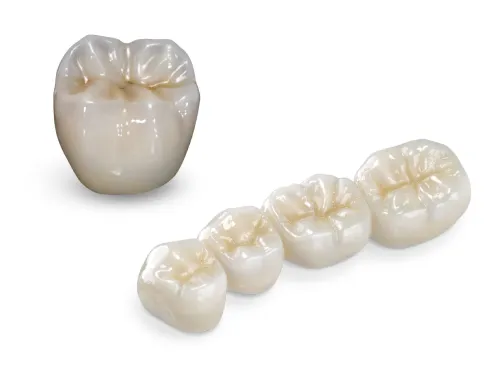
The Dental Crown Process
The visit begins with an exam and imaging to confirm that a crown is the right option. Local anesthetic keeps the tooth comfortable while dentist shapes the outer surface to create room for the crown.
Impressions or a digital scan capture precise details. A temporary crown is placed to protect the tooth while the final crown is made. At the follow-up appointment, the permanent crown is tried in, and fit, bite, and color are verified before bonding.
What To Expect Before And After Treatment
Before the procedure, plan for local anesthesia and allow time for both appointments. After preparation, mild sensitivity to temperature or chewing is common and usually fades in a few days.
Once the permanent crown is placed, most patients return to regular eating the same day. Brush twice daily with fluoride toothpaste and floss daily. A nightguard may be recommended if clenching or grinding is present.
Longevity And Maintenance
With routine care, dental crowns commonly last 10 to 15 years or longer. Longevity depends on oral hygiene, diet, bite forces, and regular checkups. Protect your restoration by limiting very sticky candies and addressing clenching with a custom nightguard if needed.
How Much Are Dental Crowns?
Dental Crowns — Starting price $991
- Single Tooth Crown — $991
- 3 Unit Bridge — $2,685
- 4 Or More Teeth — Come see us for a free consultation.
FAQs About Dental Crowns & Bridges
Hours