Implant-supported dentures in Southaven, MS — also known as snap-on dentures — provide a secure, natural-feeling way to replace missing teeth using dental implants for support. At Desoto Dentures and Implants, this guide explains how treatment works, candidacy, benefits, pricing, and what to expect from start to finish so you can decide if this approach fits your needs.
Implant-Supported Dentures Explained
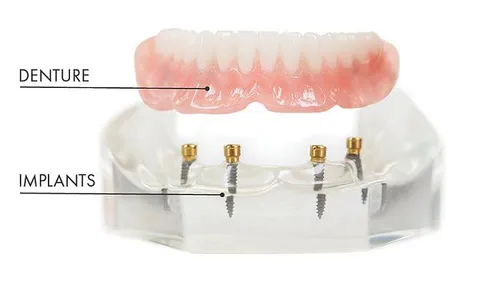
Implant-supported dentures — also called snap-on dentures or implant-retained overdentures — are dentures that attach to dental implants placed in the jawbone. Instead of relying on suction or adhesive alone, the denture “snaps” onto low-profile attachments on the implants, creating better stability for eating and speaking.
Common attachment systems include locator-style connectors that allow a small amount of movement to cushion your bite while keeping the denture stable. The number of implants can vary based on bone quality, anatomy, and personal preferences.
Benefits Of Implant-Supported Dentures
- Improved Stability: The denture attaches to implants, reducing rocking and slipping.
- Stronger Chewing: Added support helps you chew a wider variety of foods more comfortably.
- Bone Preservation: Implants stimulate the jaw, helping slow bone loss that occurs after tooth loss.
- Clearer Speech: A stable denture supports more natural pronunciation.
- Less Adhesive: Many patients use little to no denture adhesive.
- Less Bulk For Uppers: Some implant-supported upper dentures can be designed without a palate for better taste and comfort.
- Long-Term Value: With good care, implants can last for many years.
How Implant-Supported Dentures Work
- Consultation And Evaluation: A comprehensive exam, X-rays, and often 3D imaging assess bone health, gum condition, and the number of implants needed.
- Treatment Planning: Your plan outlines implant positions, attachment type, and the design of your overdenture.
- Implant Placement: Small titanium posts are placed in the jaw under local anesthesia, with sedation available when appropriate.
- Healing And Integration: Over several weeks to months, the bone bonds to the implants (osseointegration) for strong support.
- Attachment Connection: Special connectors are placed on the implants, and the denture is fitted to engage these attachments.
- Fine-Tuning: Bite and comfort are adjusted, and you receive instructions for home care and follow-up visits.
What To Expect
Most people report mild to moderate soreness after surgery that improves within a few days. A soft diet is recommended at first. Once healed, many patients notice easier chewing and greater denture confidence.
Routine maintenance matters. Expect periodic checkups to monitor implant health, evaluate fit, and replace wear items such as attachment inserts when needed.
Important: Snap-on dentures are removable. They offer enhanced stability while preserving the flexibility of removing the prosthesis for daily cleaning.
Who Is A Candidate?
Good candidates have healthy gums, adequate bone volume, and stable health. A history of gum disease, smoking, or certain medical conditions may require additional planning. Bone grafting or sinus procedures can be considered when bone is thin. Many long-time denture wearers in Southaven, Mississippi are candidates for implant-supported options, even after years of bone changes.
Care And Maintenance
- Daily Cleaning: Remove the denture to brush the denture, attachments, and gums.
- Professional Checkups: Attachments (such as O-rings or locators) can wear and may need periodic replacement.
- Relines Or Updates: As tissues change over time, relining or remaking the denture may be needed for the best fit.
How Many Implants Will I Need?
Upper: An upper implant denture requires at least 4 implants.
Lower: A lower implant denture requires at least 2 implants, although 3 or 4 provide a significant improvement in retention and stability.
How Much Are Implant-Supported Dentures?
- 4 Implants (Upper or Lower) with a denture — $6,999 + cost of extractions. This option gives you the best stability and support.
- 2 Implants (Lower Jaw Only) with a denture — $4,299 + cost of extractions. While 4 implants give you the best stability, 2 implants would still provide much more stability than a traditional denture.
- 4 Upper and 4 Lower Implants with dentures — $12,998 + cost of extractions. This option gives you the best stability for both upper and lower jaws.
Available Financing / Payment Options
Dental implants are an important investment in yourself, and having the option to break this investment down into monthly payments can help make these life-changing services more accessible and easier to fit into your budget.
We work with multiple financing providers to offer payment plans to cover either all or part of your dental implant procedure.
Proceed Finance — Longer-term options for lower payments (up to 96 months)
CareCredit — Interest-free up to 6 months, longer-term options for lower payments (up to 60 months), and the option to apply with a co-applicant to increase chance of approval.
Call Desoto Dentures and Implants to schedule your new patient exam!
Frequently Asked Questions
Hours