Full-mouth implants in Southaven, MS, can replace an entire upper or lower arch of failing or missing teeth with a fixed restoration supported by dental implants. Depending on your anatomy and treatment plan, this approach may be referred to as All-on-X, All-on-4® or full-arch dental implants. These treatments are designed for patients who need comprehensive tooth replacement and want greater stability than a removable denture can provide.
Dr. M. A. Bleibel has placed more than 15,000 dental implants and has completed more than 500 hours of continuing education focused on implant dentistry. His advanced training includes full-arch implant treatment, immediate fixed full-arch protocols and digital implant workflows. Much of the planning, implant placement, restorative treatment and related laboratory work can be coordinated in one location.
What Are Full-Mouth And Full-Arch Dental Implants?
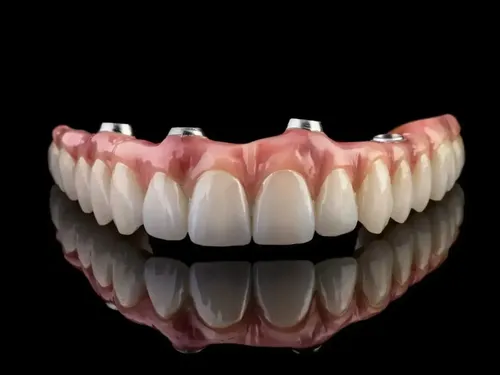
Full-mouth implants are used when most or all teeth in one or both arches need to be replaced. Instead of placing a separate implant for every missing tooth, several strategically positioned dental implants support a fixed full-arch restoration.
A full arch refers to all of the teeth in either the upper or lower jaw. Patients who need both arches restored may undergo full-mouth treatment.
Full-arch implant treatment may be considered when:
- Most or all teeth in an arch are missing.
- Remaining teeth have extensive decay, fractures or other problems that make them difficult to restore.
- Advanced gum disease has compromised multiple teeth.
- A removable denture is unstable or does not provide the function a patient wants.
- A patient wants to explore a fixed implant-supported alternative to traditional dentures.
Your dentist must evaluate your remaining teeth, gums, jawbone and overall health before determining whether full-arch implants are appropriate.
All-on-X Explained
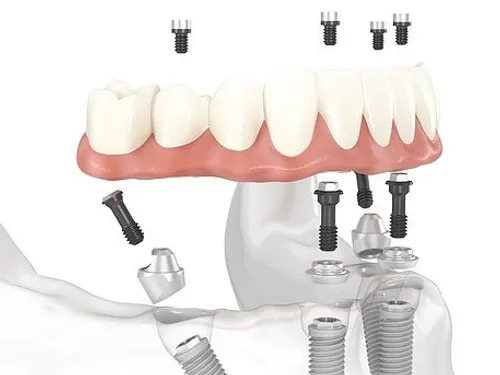
All-on-X is a full-arch implant treatment concept in which a fixed bridge is supported by multiple implants rather than an implant for every individual tooth. The “X” reflects that the exact number of implants can vary according to bone anatomy, bite forces, implant stability and the needs of the individual patient. Some arches may be restored with four implants, while others may require additional implants. The treatment plan is determined after detailed examination and digital planning. All-on-X can provide a fixed tooth replacement option for patients who would otherwise require extensive individual implant treatment or removable dentures. Because the restoration is attached to the implants, patients do not remove it at home.
What Is All-on-4?
All-on-4 is a specific full-arch implant approach that uses four implants to support a fixed restoration for an entire arch. Implant positioning is planned to make effective use of the available jawbone while providing support for the restoration. Although All-on-4 uses four implants, not every patient is best treated with exactly four. Bone volume, bone quality, anatomy, bite forces and other clinical factors may lead your dentist to recommend a different number of implants. For that reason, All-on-4 is one type of full-arch treatment, while All-on-X is a broader term that allows the number of implants to be customized. Dr. Bleibel has advanced training in immediate fixed full-arch protocols, including the Neodent Cadaver Full Arch Implants course, and has extensive experience with digital full-arch implant treatment.
Benefits Of Full-Arch Implant Treatment
Depending on the treatment plan, full-arch implants may provide:
- A fixed restoration that does not need to be removed at home.
- Greater stability than a traditional removable denture.
- Improved ability to chew a wider variety of foods after healing.
- Support for natural-looking replacement teeth designed around your smile and facial features.
- Implant support that transfers chewing forces into the jawbone.
- Reduced movement compared with removable dentures.
- A treatment option for replacing multiple failing or missing teeth at the same time.
- An alternative to placing an individual implant for every missing tooth.
Full-arch treatment is highly individualized. Your dentist will explain what level of function, appearance and stability can reasonably be expected in your specific case.
All-On-4 Vs. Snap-In Dentures Vs. Traditional Dentures
Eating
Provides stability and strength similar to natural teeth, allowing for a wide range of foods, including hard and sticky items.
More stable than traditional dentures but may still limit some food choices compared to All-on-4 implants.
Least stable option; may limit food choices and require adjustments to avoid slipping.
Speaking
Allows for natural speech without interference or slippage.
Improved stability helps with clearer speech compared to traditional dentures, though not as natural as All-on-4.
Can affect speech due to movement and lack of support, often requiring practice to speak clearly.
Roof of Mouth Coverage
No coverage of the roof of the mouth, as the implants support the denture, providing a more open feeling.
Typically covers the roof of the mouth, though less extensive than traditional dentures due to the use of implants for support.
Covers the entire roof of the mouth, which can feel bulky and interfere with taste and sensation.
Smiling and Laughing
Offers a natural appearance and secure fit, enhancing confidence when smiling and laughing.
More secure and less prone to shifting, enhancing confidence in social interactions.
May shift or slip, causing discomfort or embarrassment, impacting confidence in social situations.
Comfort
Very comfortable with no movement or shifting, as it is securely anchored by implants.
More comfortable than traditional dentures due to improved stability, but still involves some coverage of the palate.
Generally less comfortable due to movement and bulkiness; may require adjustment over time.
Gagging
Minimal to no gagging issues, as it does not cover the roof of the mouth.
Reduced compared to traditional dentures, but may still cause some gagging due to palate coverage.
Higher likelihood of gagging due to extensive coverage of the palate.
Effect on Bone Loss
Helps prevent bone loss by stimulating the jawbone through the implants.
Less effective than All-on-4 implants in preventing bone loss, as fewer implants are used.
Does not prevent bone loss, as it does not stimulate the jawbone.
Denture Adhesive
No need for adhesive, as the implants securely hold the prosthesis in place.
May still require adhesive for additional stability, though less than traditional dentures.
Typically requires adhesive for stability and to prevent movement.
All-on-4 Vs. All-on-X Vs. Full-Arch Implants
These terms describe closely related treatment concepts, but they are not identical.
- Full-Arch Implants: A general term for implant-supported treatment that replaces an entire upper or lower arch of teeth.
- All-on-4: A full-arch approach that uses four strategically positioned implants to support a fixed restoration.
- All-on-X: A broader full-arch concept in which the number of implants is customized. Four, five, six or another number may be recommended depending on the patient's anatomy and treatment needs.
The best approach is based on clinical findings rather than the treatment name alone. Your dentist will evaluate bone availability, implant positioning, bite forces and the condition of any remaining teeth before recommending a plan.
All-on-4 Vs. Snap-In Dentures Vs. Traditional Dentures
Fixed full-arch implants, implant-supported or snap-in dentures and traditional dentures replace missing teeth in different ways. A fixed full-arch restoration is secured to dental implants and is not removed by the patient at home. A snap-in denture attaches to implants for added stability but remains removable. A traditional denture rests primarily on the gums and does not use implants for support. The right option will depend on your anatomy, oral health, treatment goals, hygiene needs and budget.
How Full-Mouth Implant Treatment Works
Full-arch implant treatment requires detailed planning before surgery. Our dental team uses digital technology to evaluate anatomy, plan implant positions and coordinate the restorative portion of treatment.
- Evaluation And Consultation: Your dentist examines your teeth, gums, bite and overall oral health and discusses your goals for treatment.
- 3D Imaging And Planning: Cone beam 3D imaging is used to evaluate bone anatomy and important structures in the jaws.
- Digital Records: Digital impressions and scans can help capture the shape of your mouth, bite and existing teeth for restorative planning.
- Extractions If Needed: Teeth that cannot be preserved may be removed as part of the treatment plan.
- Implant Placement: Four or more implants are positioned according to the digital plan and available bone.
- Fixed Temporary Teeth: When implant stability and clinical conditions allow, a fixed temporary restoration may be placed during the initial treatment phase.
- Healing And Integration: The implants require time to integrate with the surrounding bone while the tissues heal.
- Final Full-Arch Restoration: After healing, the temporary restoration is replaced with the planned final fixed teeth.
Dr. Bleibel uses digital implant planning, advanced full-arch scanning techniques, scan-body and multi-unit abutment workflows, CAD/CAM technology, 3D printing and other digital tools as part of complex implant treatment. The practice also has an on-site dental laboratory that supports denture, implant and restorative workflows.
Same-Day Teeth And Immediate Full-Arch Treatment
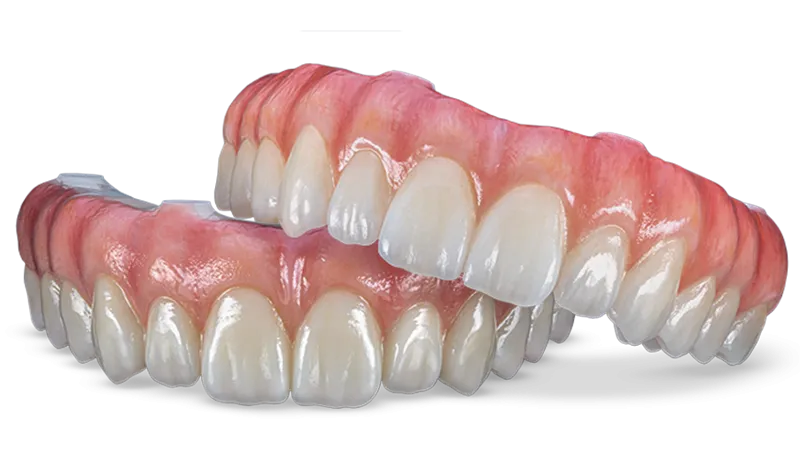
Some patients may qualify for a fixed temporary set of teeth on the day implants are placed. This approach is sometimes described as immediate-load full-arch treatment or teeth in a day.
Immediate temporary teeth are not appropriate for every patient. Implant stability, bone quality, the number and position of implants, bite forces and overall health all influence whether immediate loading is appropriate. When same-day fixed temporary teeth are possible, they serve as an interim restoration while the implants heal. The final restoration is completed after the implants have integrated and the tissues have stabilized.
Who May Be A Candidate For Full-Arch Implants?
Full-mouth or full-arch implants may be considered for patients who have extensive tooth loss, multiple failing teeth or significant problems with an existing removable denture.
Candidacy depends on several factors, including:
- The health of your gums and oral tissues.
- The amount and quality of available jawbone.
- The condition and prognosis of remaining teeth.
- Your overall medical health.
- Smoking or tobacco use.
- Your ability to maintain daily oral hygiene.
- Bite forces and other functional considerations.
- Your goals for fixed versus removable tooth replacement.
A comprehensive examination and 3D imaging are needed before your dentist can determine which full-arch approach is appropriate.
What To Expect After Full-Arch Implant Surgery
Swelling, soreness and temporary changes in chewing are common after implant surgery. Your dental team will provide instructions for cleaning the surgical areas, managing discomfort and protecting the implants during healing.
A softer diet is usually recommended during the early healing period because excessive chewing forces can interfere with implant integration. Follow the specific dietary instructions provided for your treatment.
The implants then require time to integrate with the jawbone. Healing time varies according to the individual patient, the number and location of implants and other clinical factors. Regular follow-up visits allow our dentist to monitor healing and determine when the implants are ready for the next stage of treatment.
Caring For Full-Arch Dental Implants
A fixed full-arch restoration still requires daily cleaning. Although the replacement teeth cannot develop cavities, plaque and bacteria can accumulate around the implants and underneath the restoration.
Our dentists and team recommend:
- Brushing the restoration and gumline every day.
- Cleaning underneath the fixed bridge using a water flosser, specialty floss or other recommended tools.
- Following specific instructions for cleaning around implants and multi-unit abutments.
- Avoiding habits that can damage the restoration.
- Wearing a protective appliance if your dentist recommends one for grinding or clenching.
- Attending regular professional maintenance visits so the implants, gums, bite and restoration can be evaluated.
Consistent hygiene and professional maintenance are important for protecting the tissues and bone surrounding dental implants.
Full-Mouth Implant And All-on-4 Cost
Full-arch implant treatment is a significant investment because it may include extractions, implant surgery, temporary teeth, restorative treatment and the final fixed restoration.
Upper Or Lower Arch For All-on-4 — $17,499
Full Mouth — $35,000
The existing treatment package includes all extractions, as many implants as needed, fixed temporary teeth and fixed final teeth.
Financing options are available for qualifying patients. Your dental team can review the treatment plan, included services, payment options and insurance considerations before treatment begins.
FAQs About Full-Mouth, All-on-X And All-on-4 Implants
Hours